- [](https://kinetikwellbeing.com/fever-symptoms-in-adults/#what-is-a-fever)
- [](https://kinetikwellbeing.com/fever-symptoms-in-adults/#how-can-i-accurately-take-my-temperature)
- [](https://kinetikwellbeing.com/fever-symptoms-in-adults/#duration-of-fevers)
- [](https://kinetikwellbeing.com/fever-symptoms-in-adults/#what-causes-a-fever)
- [](https://kinetikwellbeing.com/fever-symptoms-in-adults/#when-should-you-take-a-fever-seriously)
- [](https://kinetikwellbeing.com/fever-symptoms-in-adults/#how-to-manage-a-fever-at-home)
- [](https://kinetikwellbeing.com/fever-symptoms-in-adults/#so-when-should-i-worry-about-a-fever)
- [](https://kinetikwellbeing.com/fever-symptoms-in-adults/#references)
Written by Dr Serena Jones, GP
_!Image 22: Dr Serena Headshot | Kinetik WellbeingDr Serena graduated from Manchester University in 2008_ _(MBChB)._
_She also holds the_ _MRCGP, DRCOG and DFSRH._
What is a Fever?
A fever is the body’s natural response to infection or inflammation and is often a sign that your immune system is fighting something off. While most fevers resolve on their own without treatment, certain symptoms or situations should prompt more concern.
Although you can grade a fever, a high fever is generally only considered when your temperature is over 38°C [1]
Fevers above 40°C (104°F) are much rarer and are generally classed as medical emergencies. Temperatures this high may indicate serious conditions such as sepsis, heatstroke, or brain injury. Immediate treatment is required to bring down the body temperature and address any underlying causes.
How Can I Accurately Take my Temperature?
Always digitally – if you’ve been handed down a family heirloom of a mercury thermometer, please dispose of these. Forehead strips and infrared thermometers are generally not as accurate too [2].
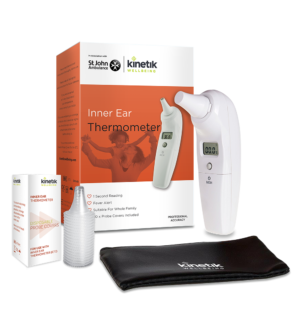
The digital ear thermometer is one of the most popular and accurate methods to taking your temperature. You usually need to gently pull your ear up and back before putting the thermometer in your ear.
_Kinetik Wellbeing have designed a digital ear thermometer that is easy to use and has an automatic fever alarm._
_View our rangehere._
Duration of Fevers:
Fevers are sometimes classed by how long you’ve had them.
- Acute Fever: Lasts less than 7 days, commonly associated with infections like colds, flu, or minor viral illnesses.
- Subacute Fever: Lasts between 7 and 14 days, which might be related to more persistent infections or immune responses.
- Chronic Fever: Persists for more than 14 days and can be linked to chronic infections, inflammatory conditions, or more serious diseases like tuberculosis or cancer. [3]


What Causes a Fever?
Fevers can be caused by many different things which include:
- _Infections:_ Generally bacterial or viruses.
- _Inflammatory conditions:_ Autoimmune diseases such a rheumatoid arthritis or lupus.
- _Cancers:_ Such as lymphomas and leukaemia.
- _Heatstroke_
- _Medications:_ such as some blood pressure medication
- _Vaccinations_
When Should you Take a Fever Seriously?
Whilst most fevers are nothing to be too concerned about and often resolve with rest and fluids, there are situations when fevers could be a sign of a more serious problem. Seek medical advice if you experience the following or if you are particularly worried:
- Fever lasting more than 3 days.
- Fever above 39.5°C.
- Severe accompanying symptoms such as
- _Severe headache, neck stiffness or a rash that doesn’t fade with the glass test._
- _Shortness of breath or chest pain._
- _Confusion or drowsiness._
- _Persistent vomiting._
- _Vaginal discharge that is discoloured or smells bad._
- _Pain on passing urine, smelly urine or pain around the kidneys._
- If you are pregnant.
- Weakened immune system such as:
- _If you have cancer_
- _If you are on an immunosuppressant medication_

How to Manage a Fever at Home
For mild fevers, home treatment is usually enough:
- Drink plenty of fluids to prevent dehydration.
- Your body needs energy to fight off infections, so rest as much as possible.
- Over-the-counter medicines like paracetamol or ibuprofen can help reduce fever and relieve discomfort.

So, When Should I Worry About a Fever?
Fevers are usually harmless and indicate that your immune system is working. However, if you’re worried about the severity, duration, or accompanying symptoms of your fever, it’s always best to seek medical advice.
When in Doubt, Seek Help
References:
- NHS: https://www.nhs.uk/conditions/fever-in-adults/
- Mayo clinic: https://www.mayoclinic.org/diseases-conditions/fever/in-depth/thermometers/art-20046737#:~:text=This%20type%20of%20thermometer%20may,forehead%2C%20also%20may%20affect%20accuracy.
- Uptodate: https://www.uptodate.com/contents/pathophysiology-and-treatment-of-fever-in-adults#H1668285745